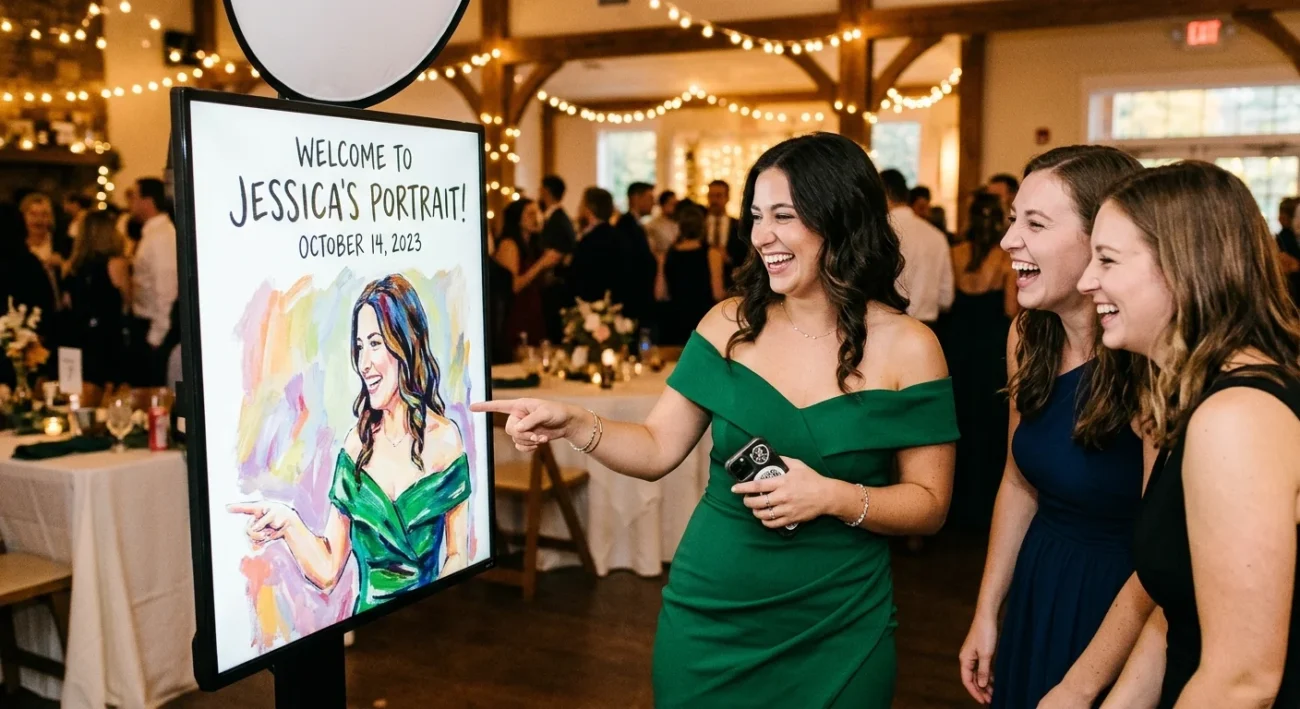
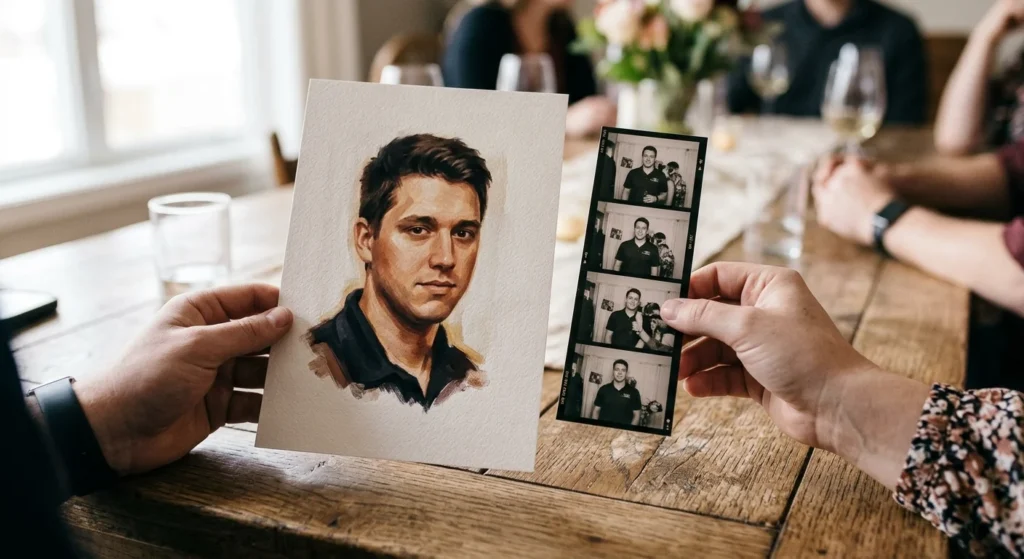
An AI photo booth takes a guest’s photo and uses generative AI to turn it into a themed or stylized portrait, usually within seconds. The result is delivered by print, QR code, text, or email. In the US, rentals run from several hundred dollars for a simple mirror setup to several thousand for a full-service build.
This guide covers how the technology works, real price ranges from US vendors, and the practical details most rental pages skip, such as floor space, internet needs, and what happens to guest faces after the shot.
What Makes an AI Photo Booth Different From a Regular One
A regular booth captures what is in front of the lens, with props or filters at most. An AI photo booth rebuilds the image. One vendor’s gallery shows guests turned into claymation figures, baroque oil paintings, K-pop idols, and Old West cowboys.
That changes how guests behave. They check the screen, compare results, and send them to friends. One New Jersey rental company describes the shift as turning a simple photo station into an actual event attraction.
How an AI Photo Booth Works Step by Step
- A camera takes one high-quality photo of a guest or group. One vendor’s booths work from a single photo.
- The software reads the face, pose, and background.
- The guest or operator picks a theme, and a generative model produces a new image.
- The result is printed or sent by QR code, text, or email.
Processing usually runs in the cloud, so the booth needs a steady connection. Cloud computing is what lets results come back quickly, even at large events.
Why Wait Time Decides the Guest Experience
Generating an image takes longer than a camera flash. One event-hire guide tells buyers to read the retry rules and check whether a second try costs a credit before they get a quote.
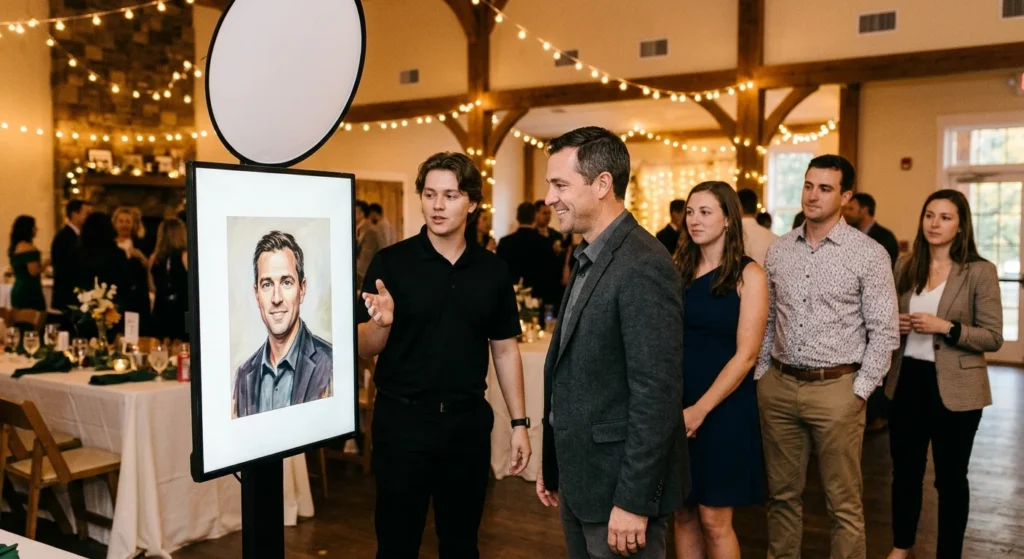
A slow booth with a long line behind it will frustrate a 200-person reception. Ask the vendor how many guests per hour the booth handles in the setup you are booking, not in a demo.
Where an AI Photo Booth Fits Best
The format suits events where guests have time to look at screens and talk about the results. It is less suited to a tight cocktail hour where people keep moving.
Corporate Events and Trade Shows
Brands use it to give attendees something to share while collecting contact details. Snapbar says its booth captures a lead in the same moment that it creates the portrait. Simple Booth says its experiences can include built-in data capture such as email addresses and phone numbers.
Weddings and Private Parties
At weddings and parties the draw is the keepsake. Guests leave with a stylized portrait they would not get from a standard booth. Themes matter here, so ask to see samples of the exact styles you want before you book.
What an AI Photo Booth Costs in the US
No single price exists, and published numbers differ a lot. Here are examples from US vendors.
| Format | Price seen | Source |
| Mirror AI booth, Pennsylvania and Maryland area | $775 | 3 Monkeys Inflatables listing |
| Traditional photo booth, national average | $400 to $500 or more | Thumbtack |
| AI booth, Los Angeles | About $1,500 for 3 hours digital, prints about $2,500 | Lucky Frog Photo Booth |
| AI booth, Chicago | $2,000 to $10,000+ | Magic Moment Photo Booth |
The prices come from a mirror unit that includes one attendant, a general photo booth average, an LA vendor with separate digital and print packages, and a Chicago guide that groups AI booths with premium builds. The gap comes from the format, the hours, whether prints are included, and how much custom branding the booth needs.
Treat these as starting points and ask for a written quote with every fee listed.
Rent, Buy, or Run Software Only
For a single event, renting is the simple choice. For a business that books booths every weekend, owning or licensing software can pay off. One cost guide puts the break-even point on an annual software plan at ten months of use.
Browser-based platforms offer another route. Snapbar’s AI booth runs in any browser with no hardware. Vendors that sell booths also argue that buying beats renting for frequent hosts, so weigh their numbers against your own event count.
Space, Power, and Internet Checklist
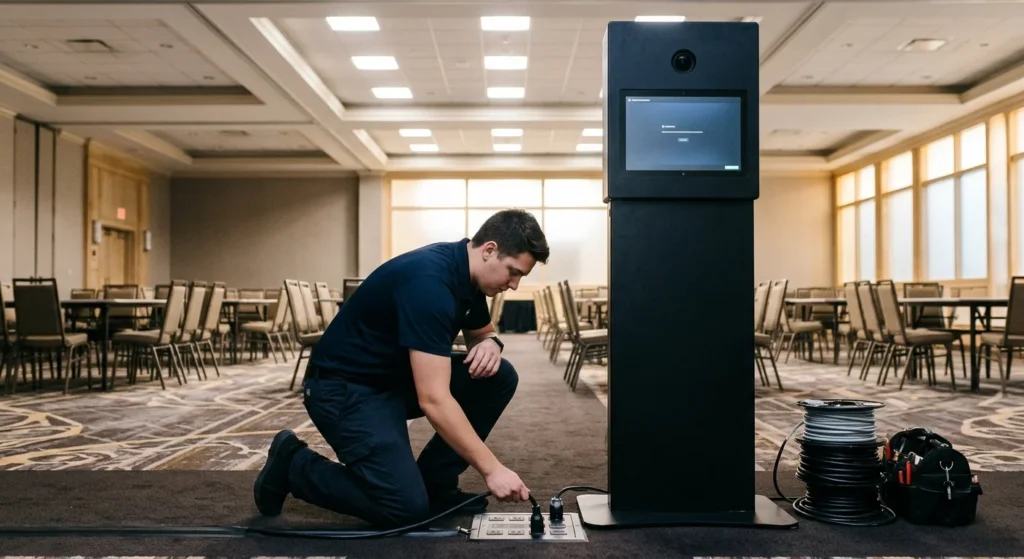
One Los Angeles vendor says its AI setup needs at least 10 x 16 feet for guests, equipment, attendants, and prompt engineers. A smaller mirror unit needs two outlets.
Before the event, confirm these with the vendor:
- The floor area the booth needs, including the queue.
- How many outlets are required and where they must be.
- Whether the booth uses venue Wi-Fi or brings its own connection.
- What happens if the internet drops mid-event?
Privacy and Guest Consent
These booths analyze a person’s face and features to generate each image, so guests are handing over more than a snapshot. Ask the vendor how long original photos are stored, whether they are deleted after the event, and whether they are used to train any model.
Put a short notice near the booth, and make email or phone capture an opt-in. Some states regulate face scans, with Illinois’s Biometric Information Privacy Act the best-known example. If you host there or collect data from guests there, check with a lawyer first. This section is general information, not legal advice.
A Pre-Booking Checklist
- Samples of the exact themes you want, not just the vendor’s best gallery images.
- Guests per hour in your venue setup.
- Retry and failure rules for bad generations.
- Print and digital delivery options, and how fast each arrives.
- Storage and deletion policy for guest photos.
- A written quote with attendant, travel, and print fees listed.
When a Regular Photo Booth Is the Smarter Pick
If your budget is under $500, a classic booth is the better choice, since the average traditional rental sits near that range. It is also the safer pick at a venue with weak internet, or when guests want a printed strip in hand within seconds.
An AI photo booth earns its price when the novelty is the point of the event, such as a launch, a brand activation, or a wedding where guests will enjoy comparing portraits.