If your feed is full of brooding vocals, heavy riffs, and dark cover art, you have probably seen SKARS. The comments keep asking one thing: is Skars AI? Nobody outside the project can prove it either way, and the act has never given a clear answer. What exists is a pile of circumstantial signs that convinced many listeners the music is AI generated or AI assisted. This guide separates what you can observe from what is guesswork. It also shows you how to test any suspicious music account yourself.
What Is Skars?
SKARS is a goth rock and metal act that mixes punk energy, nu metal weight, and pop hooks. Descriptions vary, with some calling it a solo project and others calling it a band. Its songs spread mainly through short clips on TikTok and Instagram Reels, and the catalog already includes several full albums. You can find it on streaming services, and its Instagram account posts often. What you cannot easily find is a named lineup, a confirmed hometown, or footage of a live show. That gap is where the questions start.
Why People Think Skars AI Is Behind the Music
No lab test or admission backs the claim. The case rests on patterns that appear together, and no single one is decisive on its own.
1: No Verified Members, Photos, or Live Shows
Working bands leave a trail. They play venues, get photographed by local writers, and answer follow-up questions in interviews. As of this writing, SKARS has no verified roster, no documented tour dates, and no audience footage from a real venue. Much of the coverage reads like rewritten press kit copy, with no reporter quoting a named member. A solo artist can stay private for good reasons. Still, the combination of rapid growth and zero verifiable identity is rare for a project this visible.
2: A Release Pace Few Solo Artists Match
Writing, recording, mixing, and mastering a full album takes most independent artists months. SKARS has put out several albums in a short span, some with fifteen or more tracks. Generative music tools can produce a finished-sounding song in minutes, so that pace fits them far more easily. It also fits a producer with a huge back catalog of unreleased songs. Speed raises suspicion, but it does not settle anything alone.
3: Repeating Mix and Vocal Habits
Listeners with production experience point to similar reverb tails and vocal tone across songs that should come from different sessions. They also describe small shifts in accent or timbre between verses, which can happen when a voice model blends training samples. Those are impressions from ears, not lab results. A single engineer with a favorite plugin chain can also produce a consistent sound. Treat this as a weak signal that needs support from other clues.
4: Reused Melodies and Copycat Complaints
The loudest backlash comes from musicians who say certain SKARS songs open with melodies that match existing tracks. No credit or clearance has been mentioned. A human songwriter would normally license a famous hook or avoid it. A model trained on copyrighted recordings could echo one without anyone noticing. A lazy human shortcut could also explain it. Either way, this complaint is a major source of the anger.
5: Copy-Paste Comment Sections
Viewers in video breakdowns note that comments under SKARS posts often repeat the same phrasing. That looks like automated engagement. Many pages sharing the clips also reuse identical thumbnails. Engagement farming is a tactic used to push any account, human or synthetic. So it suggests the buzz may be manufactured, but it says little about how the songs were made.
Is Skars AI? What Nobody Has Proven
Here is the honest limit. Neither the project, a label, nor an independent audio analysis has confirmed that SKARS is AI generated. The act has not issued a formal statement either way. Its Instagram replies to accusations have reportedly been short and sarcastic, which reads as neither admission nor denial. Compare that with artists who disclose AI use in their bio, or who name the people who wrote and played each part. SKARS has done neither. Until it does, the claim stays unproven, and any flat denial would be unproven too.
When These Red Flags Can Mislead
Every clue above has an innocent explanation, and ignoring that leads to false accusations. Plenty of real artists stay anonymous to protect their privacy. Bedroom producers who release music nonstop exist, especially in metal and punk. Lo-fi mixing and heavy processing can make human vocals sound uniform. Tools such as Suno and Udio have also changed how people draft ideas. A human can write lyrics, shape the arrangement, and use a generator for some parts. That blend is hard to spot and harder to label. The more flags you stack, the less any one excuse works.
How Streaming Platforms Handle AI Music Now
Rules have changed fast, and they differ by service. Deezer tags albums it detects as fully AI generated and excludes them from recommendations. It has also announced a toggle that lets listeners hide AI music completely, due before the end of the year. Spotify allows AI music but now adds an AI Persona badge to some artist profiles. Artists can disclose the label themselves, and Spotify says it also reviews profiles that look synthetic. Apple Music and YouTube also ask for disclosure and label what gets declared.
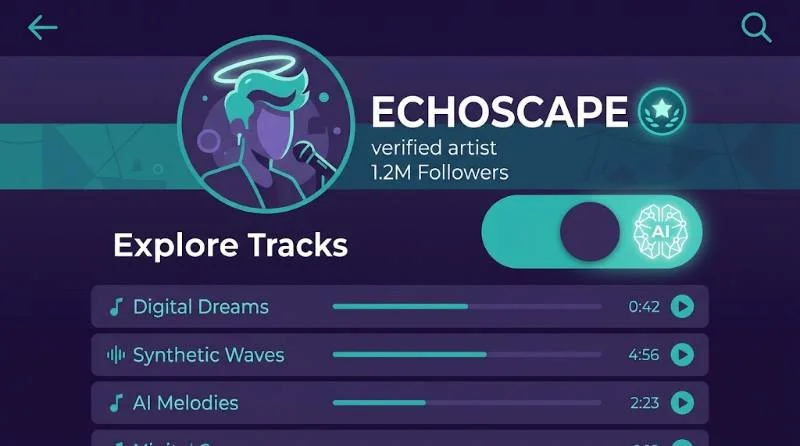
That matters for this question. A platform label is the closest thing to independent evidence you can get today. Open the SKARS profile on each service and look for a badge or notice. If one appears, treat it as meaningful. If none appears, remember that detection is imperfect and disclosure is voluntary on most services, so a missing label proves nothing.
The Velvet Sundown shows how messy these disputes get. The band drew a large following in 2025 while its own accounts insisted real people made the music. Deezer flagged its album as AI generated, and many outlets now call the group AI made.
How to Check Whether Skars Is AI Yourself
You do not need special software to form a reasonable view. These steps work for SKARS and for any account you doubt.
- Search for live proof. Look for dated shows, venue listings, and fan-shot video that shows the performer from several angles.
- Reverse image search the press photos. Synthetic faces often show warped hands, jewelry, and text, or reappear on unrelated accounts.
- Check songwriter credits. Search the song titles in the public repertory databases run by ASCAP and BMI. A named, registered writer is a good sign. An empty record is a mild flag at best, since many independent songs are registered late.
- Read the streaming credits. Open the track details on Spotify and see which writers, producers, and performers are listed. Generic or missing names are worth noting.
- Compare release dates. Count how many full albums arrived within one year and how many tracks each contains. A pace far above normal is a flag, not proof.
- Listen closely for vocal drift. Focus on breaths, consonants, and long held notes, where synthetic voices often blur or wobble. Compare a chorus with a verse in the same song.
No single step is conclusive. Three or four flags together form a strong pattern. One flag alone is a reason to stay curious, not to accuse.
Does It Matter If Skars Is AI?
For many listeners, the answer is no. A good song is a good song, and playlists do not ask who wrote it. The real objection is usually about honesty. Fans who bond with an artist’s story feel cheated when that story turns out to be invented. Working musicians have a fair point too. They compete against accounts that can release a whole album in the time a band spends finishing two songs. Clear labeling solves most of this. If SKARS said plainly how its music is made, most of the anger would fade, and listeners could simply choose.