
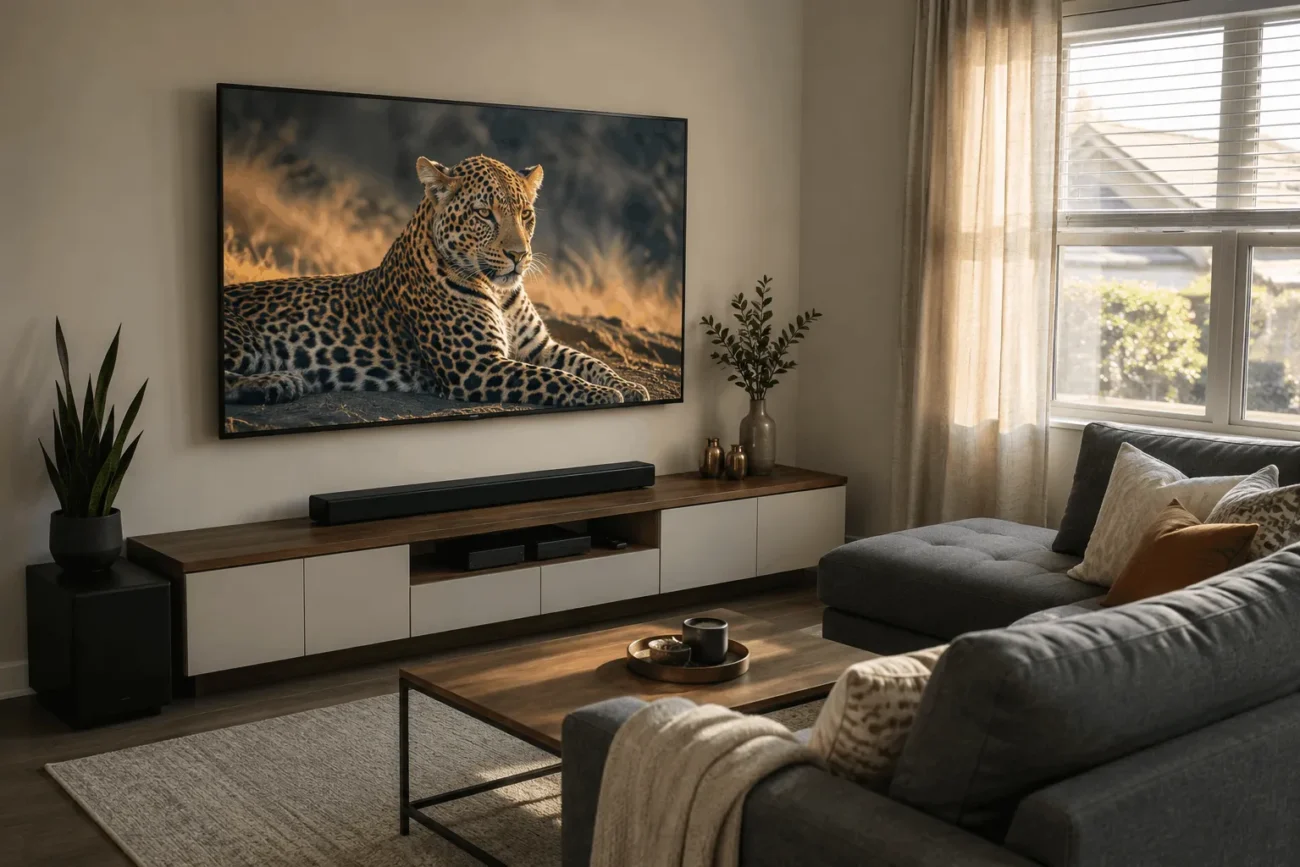
A Samsung 65 inch smart TV gives you enough screen for a real home theater feel while still fitting most living rooms. Samsung sells this size across four different lines, Crystal UHD, QLED, Neo QLED, and OLED, and they are priced and built differently enough that “65 inches” alone doesn’t tell you much. This guide walks through what separates those lines, what you’ll actually pay, and how to tell if 65 inches fits your room in the first place.
Which Samsung 65 Inch Smart TV Models Are Worth Considering
Samsung splits its TV lineup by panel technology, and that split matters more than the model number does. Each line uses a different backlight and panel structure, which changes brightness, contrast, and price at the same 65 inch size.
Crystal UHD
Crystal UHD is Samsung’s entry point into 4K. It uses a standard LED backlight without quantum dots, so colors and brightness are decent but not standout. For a bedroom, guest room, or a household that mostly watches during the day with the shades open, a 65 inch Crystal UHD set covers the basics without the added cost of quantum dot or mini LED hardware.
QLED and Neo QLED
QLED adds a quantum dot filter over the LED backlight, which widens the color range and pushes brightness higher than Crystal UHD. Neo QLED goes a step further with a mini LED backlight, using thousands of smaller LEDs instead of a handful of large ones. That finer control reduces the “blooming” halo effect around bright objects on a dark background, which is the main weakness of older LED TVs.
OLED
Samsung’s OLED sets use self-lit pixels, so each pixel turns on and off independently instead of relying on a backlight. That gives true black levels and very high contrast, which shows up most in dark, cinematic content. At 65 inches, OLED is Samsung’s priciest option, and it’s worth it mainly for viewers who watch in a dim room and care about picture depth over raw brightness.
Samsung’s model numbers follow a rough tier system within each line, and it helps to know what that tier number is telling you before comparing listings. Within QLED, a lower tier generally means fewer local dimming zones and a simpler processor, while a higher tier adds brightness and finer dimming control at the same 65 inch size. The same pattern holds within Neo QLED and OLED, so two TVs using the same panel technology can still perform noticeably differently depending on where they sit in that lineup
How Much a Samsung 65 Inch Smart TV Costs (US)
Pricing on a 65 inch Samsung shifts constantly with sales events like Black Friday and Prime Day, so treat the numbers below as general bands rather than fixed prices, and check current listings before you buy.
Crystal UHD models in this size generally sit at the low end of Samsung’s 4K lineup. QLED models cost more, reflecting the quantum dot upgrade, and Neo QLED sits above standard QLED because of the mini LED backlight. OLED occupies the top of the range at 65 inches, typically priced well above the other three lines.
Retailers also run their own promotions on top of Samsung’s list pricing, so the same model can vary by a meaningful amount depending on where and when you buy it. Signing up for price-drop alerts on a specific model number, rather than a general size and line, is the most reliable way to catch a real discount instead of a marked-up “sale.”
Samsung typically refreshes its lineup once a year, and the outgoing year’s models usually drop in price once the newer version is announced, even though the picture quality difference between the two is often small. If you don’t need the newest processor or the latest smart features, checking whether last year’s 65 inch model is still in stock can save a real amount of money for a nearly identical viewing experience.
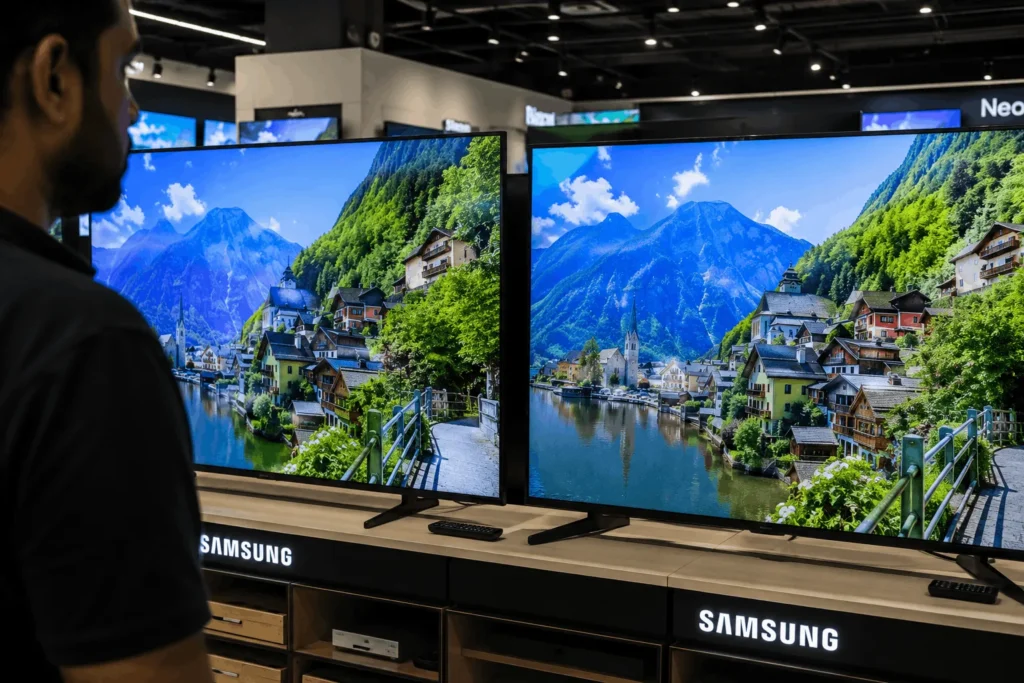
Picture Quality Features That Actually Matter
Spec sheets list a lot of numbers. A few of them make a real difference in what you see day to day, and the rest are mostly marketing.
Panel Type and Brightness
Peak brightness matters most in rooms with windows or overhead lights, since a dim panel washes out in daylight. Neo QLED and QLED models generally get brighter than Crystal UHD or OLED, which makes them a better fit for sunlit living rooms. OLED trades peak brightness for deeper blacks, so it performs best once the lights are down.
Refresh Rate and Gaming Features
If you’re connecting a current-generation console or a gaming PC, look for a panel with a 120Hz refresh rate and HDMI 2.1 ports, since both are needed for smooth 4K gaming at higher frame rates. Samsung’s Game Bar overlay also shows frame rate, input lag, and aspect ratio settings without leaving the game, which is a genuinely useful feature rather than a box-ticking spec.
Samsung’s Tizen Smart TV Platform
Every Samsung 65 inch smart TV runs Tizen, Samsung’s own operating system, instead of Google TV or Roku’s platform. Tizen comes preloaded with the major streaming apps, including Netflix, Disney+, and Prime Video, and it supports both Apple AirPlay and Google Chromecast-style casting depending on the source device.
Tizen also ties into Samsung’s SmartThings app, so if you already own Samsung appliances or smart home devices, the TV can act as a hub for that ecosystem. The tradeoff is that Tizen’s app store is smaller than Google TV’s, so a few niche streaming apps may be missing, though every major service is covered.
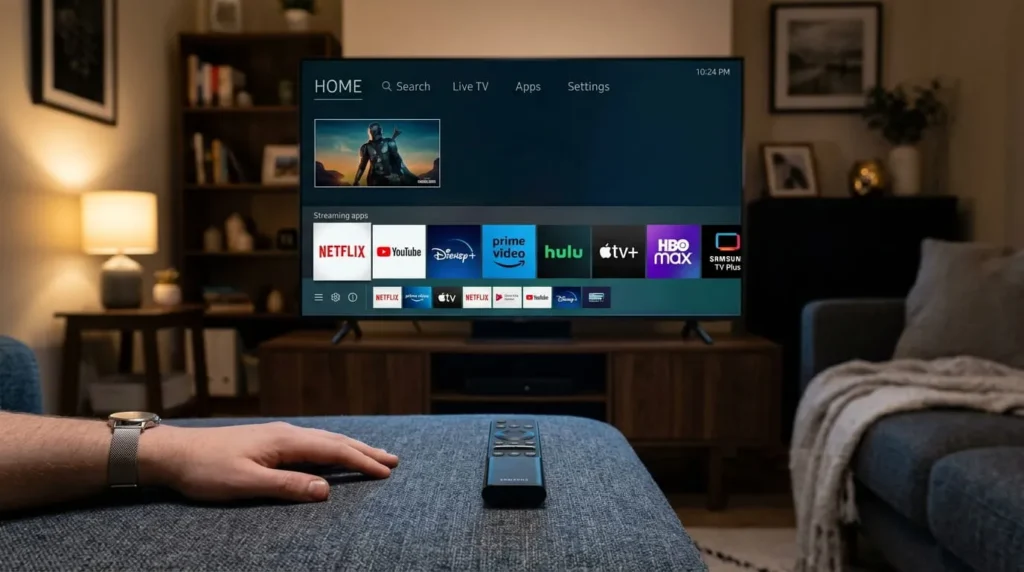
remote control restinga nearby armrest in the foreground, soft indoor lighting, realistic photography angle as if captured by someone sitting on their couch.
Sound and Connectivity on a Samsung 65 Inch Smart TV
Picture specs get most of the attention, but the built-in speakers and port layout affect daily use just as much once the TV is set up.
Built-In Speaker Quality
A 65 inch TV chassis is thin, and thin chassis leave little room for speaker drivers or a bass chamber. Samsung’s built-in speakers handle dialogue and everyday viewing fine, but they run out of low-end punch on action movies or music-heavy content. Most Neo QLED and OLED models support Q-Symphony, which lets the TV’s own speakers play alongside a compatible Samsung soundbar instead of shutting off, which noticeably widens the sound compared to the soundbar working alone.
HDMI and eARC Ports
Check the port count before buying, not just the port version. Budget Crystal UHD models sometimes ship with only two or three HDMI ports, which fills up fast once a game console, streaming box, and soundbar are all connected. Look for at least one HDMI port labeled eARC, since that’s the port a soundbar needs to send audio back to the TV and receive it from streaming apps without a separate optical cable.
Is 65 Inches the Right Size for Your Room
Screen size only works if your seating distance matches it. A commonly used rule of thumb for 4K content is to sit roughly 1 to 1.5 times the screen’s diagonal size away from it in feet, which puts the ideal viewing distance for a 65 inch TV somewhere around 6.5 to 9.5 feet.
Measure your actual couch-to-wall distance before buying rather than guessing from the room’s general size. Sitting closer than that range makes individual pixels and compression artifacts more visible on lower-quality streams, while sitting much farther away wastes the extra detail a 65 inch 4K panel is built to show.
Wall space matters too. A 65 inch Samsung TV needs roughly 57 inches of width and about 33 inches of height when mounted, so measure the wall or console area before ordering, especially in apartments with narrower living rooms.
If you’re placing the TV on a stand instead of mounting it, check the width and spacing of the included feet, not just the overall screen width. Some 65 inch Samsung models use feet placed near the outer edges of the panel, which needs a media console close to the full screen width, while other models use a single centered pedestal that fits on a narrower piece of furniture. That detail is usually buried in the product’s dimension diagram rather than the main spec list, so it’s worth opening before you order a new stand to match.
Where to Buy and What to Check FirstWhere to Buy and What to Check First
Samsung sells directly through its own site, and the same models show up at major retailers like Best Buy, Costco, Amazon, and Walmart, sometimes as retailer-exclusive variants with slightly different model numbers. Those exclusive versions usually match the core panel and features of the standard model but may skip a minor extra like a premium remote, so it’s worth reading the full spec list rather than assuming two similarly priced TVs are identical.
Before completing a purchase, confirm the return window and whether in-home delivery with wall mounting is included or billed separately, since a 65 inch TV is awkward to move and mount without help. Check the warranty length as well. Samsung’s standard warranty typically covers one year on parts and labor, and extending it through the retailer at checkout is often cheaper than buying a separate protection plan later.
