
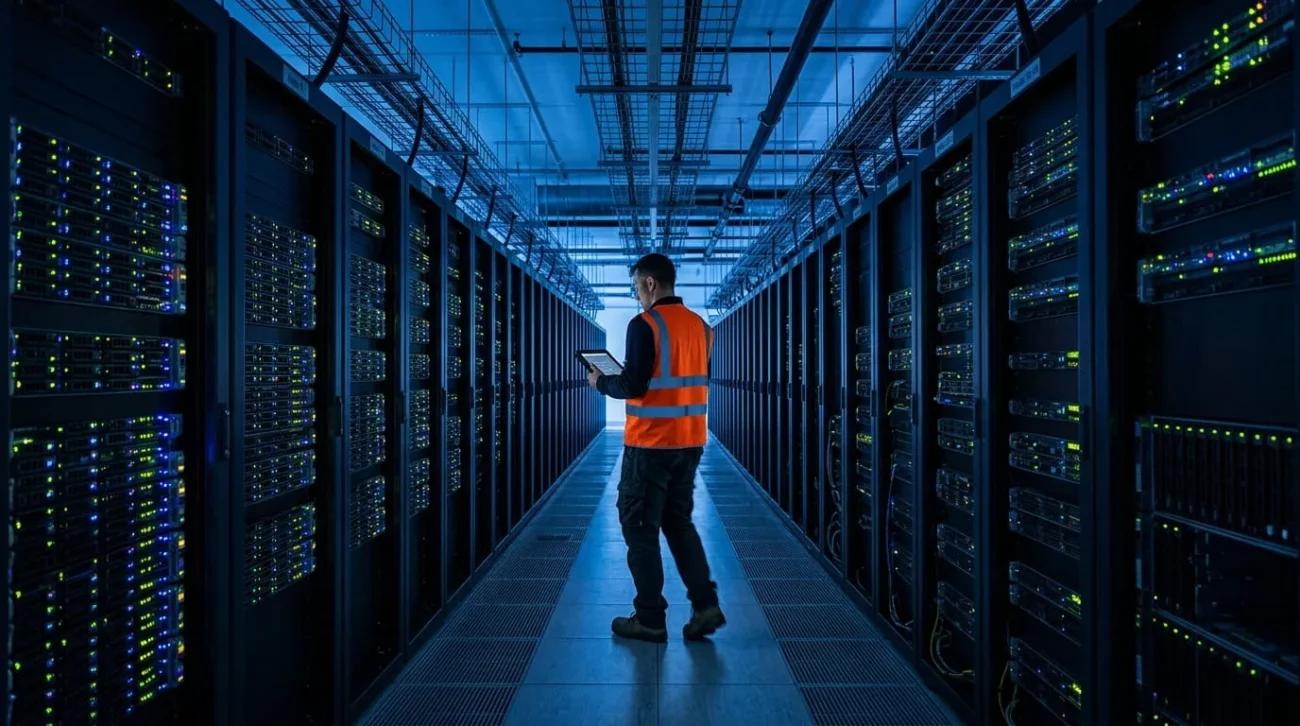
AMD just signed two of the biggest AI infrastructure deals of the year in back-to-back days. On July 22, the company agreed to invest up to $5 billion in Anthropic while supplying it with AI accelerators, and a day later it announced a separate inference partnership with Cerebras Systems. Together, the two deals mark AMD’s most direct challenge yet to Nvidia’s hold on the AI chip market.
What Happened This Week in AMD’s AI Chip Deals
Advanced Micro Devices and Anthropic announced a multi-billion-dollar AI server agreement on July 22. Under the deal, Anthropic will deploy up to 2 gigawatts of AMD’s Instinct MI450 accelerators, with the first wave coming online in the first half of 2027. AMD also committed to invest up to $5 billion in Anthropic once specific deployment milestones are hit, according to Bloomberg.
It is AMD’s first direct investment in Anthropic, and it ties AMD’s revenue directly to how fast Anthropic scales. AMD CEO Lisa Su said the company has wanted to be a major part of Anthropic’s infrastructure for some time, and that the two engineering teams have already been collaborating for months, per reporting from Yahoo Finance.
The Anthropic Agreement in Numbers
A single gigawatt of computing capacity can power roughly 750,000 homes at any given moment, which gives a sense of the scale Anthropic is planning for. Seeking Alpha estimated the deal could generate up to $27.2 billion in revenue for AMD over its lifetime, though that figure depends on Anthropic actually hitting its deployment targets.
The two companies also signed a separate engineering agreement to optimize AMD’s ROCm software platform specifically for Anthropic’s Claude models. That detail matters because software compatibility, not raw chip specs, has been the main reason customers stick with Nvidia’s ecosystem.
Why AMD Needed a Deal Like This
For years, Nvidia has controlled the training market for large AI models almost entirely. Leading labs including Anthropic and OpenAI have leaned on Nvidia’s GPUs as their primary source of compute, and that dependence has made it difficult for any rival chipmaker to gain real ground. AMD’s answer has been to pair its hardware with capital, effectively buying its way into workloads that were nearly impossible to reach two years ago.
The investment structure is built to keep Anthropic on AMD’s hardware for years. In return, AMD gets direct feedback from one of the largest AI labs in the world as it develops its next chip generations, the MI400 and MI500 series. One analyst quoted by TechBuzz described this as AMD paying for large-scale product validation, something that is normally very hard to buy at any price.
Nvidia’s Grip on the Training Market
Anthropic currently runs its workloads across a mix of hardware, including Google’s tensor processing units, Amazon’s Trainium chips, and Nvidia GPUs, according to the Wall Street Journal. Adding AMD to that list does not remove Nvidia from the picture, but it does spread Anthropic’s dependence across more suppliers.
That diversification strategy protects Anthropic against supply shortages and gives it more negotiating leverage on pricing. It also gives AMD a foothold with a customer that is expected to keep growing its compute needs for years.
The Cerebras Partnership Adds a Second Front
One day after the Anthropic news, AMD announced a technical partnership with Cerebras Systems on July 23. The deal combines AMD’s Helios rackscale systems with the Cerebras Wafer-Scale Engine into a single disaggregated AI inference setup, unveiled at AMD’s Advancing AI 2026 event.
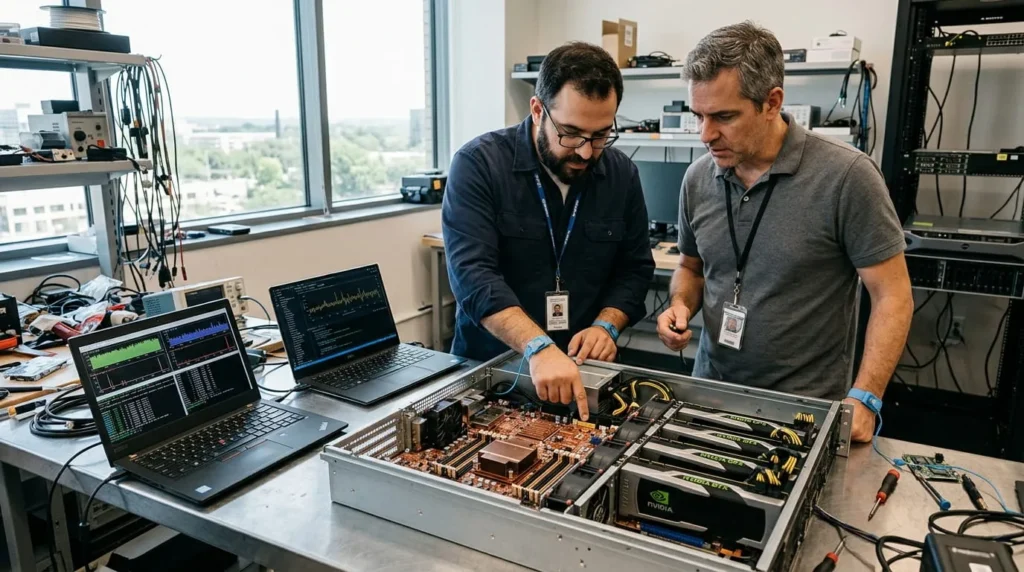
Cerebras plans to deploy AMD Helios systems in its own data centers, with the joint offering available first through Cerebras Cloud later in 2026. Based on modeling from AMD Performance Labs and Cerebras, the combined system is expected to deliver up to five times more tokens generated per second per watt compared with a Cerebras-only setup, when tested against a comparable large language model workload.
How the Two Chips Split the Work
The partnership is built around a division of labor. AMD’s Instinct GPUs handle prompt processing and large context windows, the part of inference that requires heavy upfront computation. Cerebras’s Wafer-Scale Engine then takes over token generation, a stage that depends more on raw memory bandwidth than processing power, according to Axios.
This kind of workload splitting matters because inference, not training, is quickly becoming the larger cost center for AI companies. Every chatbot reply, coding suggestion, or AI agent action runs through inference, and the speed and cost of that step directly shape what AI products can charge users.
What Wall Street Is Saying
The market reaction to both deals was mixed. AMD shares fell around 3% after the Cerebras announcement even as Cerebras stock rose close to 4%, based on numbers reported by Invezz. Some traders read that as short-term profit-taking rather than a change in AMD’s underlying story, since the stock had already priced in a good deal of good news from the Anthropic deal a day earlier.

Nvidia and Google shares also slipped in the same trading window, a sign that investors are re-pricing how AI infrastructure spending gets divided among suppliers rather than assuming Nvidia keeps the entire pie. TradingKey noted that Anthropic’s own IPO process, reportedly targeting a valuation near $965 billion, adds another reason AMD wanted to lock in the relationship now rather than later.
What This Means If You Are Watching AMD Stock
For anyone tracking AMD as an investment, the Anthropic and Cerebras deals both point toward the same theme: AMD is trying to win specific pieces of the AI compute stack rather than compete with Nvidia head-on across every category. The Anthropic deal targets large-scale training and deployment. The Cerebras deal targets inference efficiency. Both push AMD further into recurring, multi-year revenue rather than one-time hardware sales.
Whether these deals convert into real market share still depends on execution. Delivery timelines, TSMC’s advanced packaging capacity, and high-bandwidth memory supply will all shape how quickly AMD can actually ship the volume of chips these agreements call for.
The Risks Nobody Is Pricing In Yet
Revenue from the Anthropic deal is still years away, and it depends on Anthropic hitting deployment milestones that have not happened yet. If Anthropic’s growth slows, or if its IPO underperforms expectations, the economics of AMD’s $5 billion commitment change. If Anthropic’s growth holds up, the investment could look inexpensive in hindsight.
Nvidia’s software ecosystem, built around CUDA over more than a decade, remains the bigger long-term obstacle. AMD’s ROCm optimization work with Anthropic is a step toward closing that gap, but switching costs for large AI labs are real, and Nvidia is not standing still while AMD makes these moves. Nvidia continues to ship new chip generations on a roughly annual cadence, so AMD has to keep pace on performance even while it works to fix the software gap.
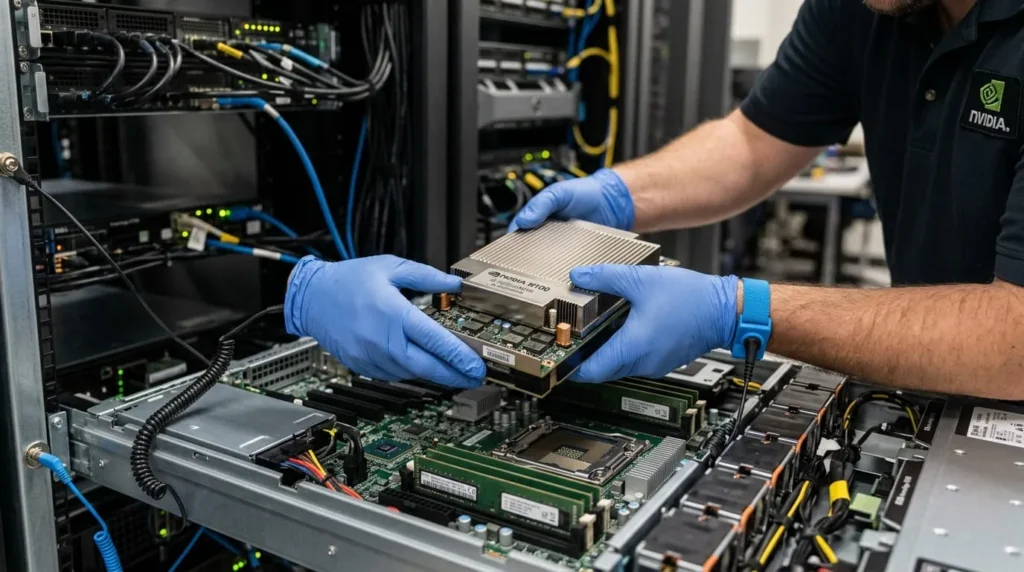
There is also a supply chain layer to watch. Both deals depend on advanced chip packaging and high-bandwidth memory that only a handful of suppliers can produce at scale, so a shortage anywhere in that chain could delay shipments regardless of how strong demand looks on paper.
How This Fits the Broader AI Chip Race
These two deals did not happen in isolation. Industry estimates cited by TechBuzz put combined AI infrastructure spending from the top AI labs at more than $50 billion for 2026 alone. That spending pace has created a land grab mentality, where locking in long-term chip capacity now matters more to buyers than getting the best price today.
AMD is not the only company benefiting from that scramble. Cloud providers, data center builders, and memory suppliers all see higher demand whenever a deal like this closes, since a chip deployment of this size needs power, cooling, networking, and physical space to match. Anthropic’s decision to work with AMD alongside its existing Google, Amazon, and Nvidia hardware also signals something about where the whole AI industry is heading: fewer companies want to depend on a single chip supplier for workloads this large.
For AMD specifically, landing Anthropic as a named customer carries weight beyond the dollar figures. It gives AMD a reference customer it can point to when negotiating with other AI labs that have been reluctant to move workloads off Nvidia hardware. That reputational effect is difficult to quantify, but it tends to matter as much as the deal terms themselves in a market where trust in a chip’s real-world performance takes time to build.
What Comes Next
The next milestones to watch are the first MI450 deployments expected in the first half of 2027, the rollout of the AMD-Cerebras inference offering later in 2026, and any update on Anthropic’s IPO timeline. Each of those will show whether this week’s announcements translate into shipped hardware and booked revenue, or stay largely aspirational.