
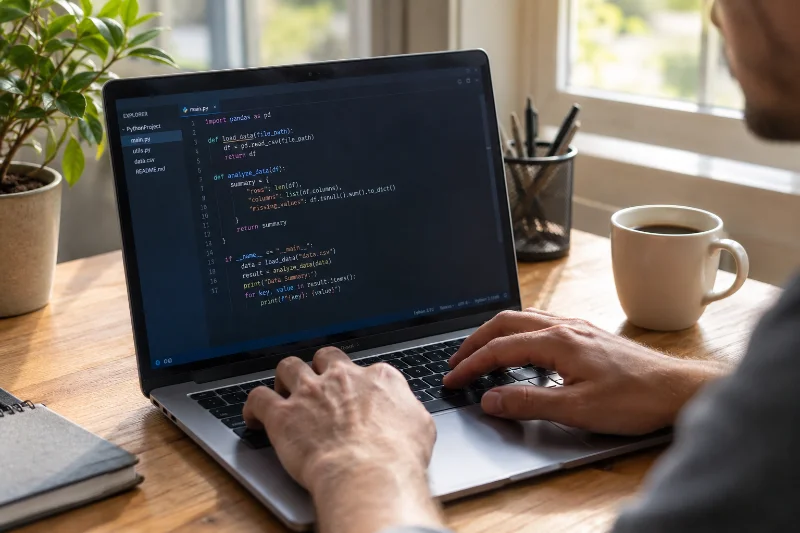
Dynamic typing in Python means a variable’s type is checked while the program runs, not before it runs, and the same variable name can hold a string in one line and an integer in the next. This single design choice shapes how Python code gets written, tested, and debugged every day.
If you have ever assigned x = 5 and then, a few lines later, written x = “five” without Python complaining, you have already seen dynamic typing in action. The interpreter does not ask what type x is supposed to be. It only checks the type at the moment the code actually runs.
How Dynamic Typing Works Under the Hood
Every value in Python carries its own type information as part of the object itself. A variable is just a label pointing at that object. When you write x = 5, Python creates an integer object and points x at it. When you later write x = “five”, Python creates a string object and moves the label x over to point at that new object instead.
The old integer object is not converted into a string. It is simply left behind, and Python’s garbage collector cleans it up once nothing references it anymore. This is why Python is sometimes described as having “dynamic binding” rather than dynamic types in the strictest sense. The type belongs to the object, not the variable name.
You can check this yourself with the built-in type() function:
x = 5
print(type(x))
x = “five”
print(type(x))
Running that snippet prints <class ‘int’> first, then <class ‘str’>, confirming the type switch happened at runtime.
Dynamic Typing vs Static Typing
The clearest way to understand dynamic typing is to compare it against the alternative most other mainstream languages use.
| Aspect | Dynamic Typing (Python) | Static Typing (Java, C++) |
| When types are checked | At runtime | At compile time |
| Variable declarations | No type keyword needed | Type must be declared upfront |
| Flexibility | A variable can change type | A variable’s type is fixed |
| Error discovery | Often found while the program runs | Often found before the program runs |
1. Static Typing in Languages Like Java and C++
In Java, you would write int x = 5; and the compiler locks x to the integer type for the rest of its life in that scope. Trying to assign a string to it later will not even compile. The compiler catches the mismatch before the program ever runs, which is one reason large Java codebases can refactor with more confidence.
2. Where Python Fits In
Python skips that compile step entirely for type checking. There is no separate compilation phase that inspects every variable, so the interpreter finds out about a type mismatch only when it reaches that specific line of code during execution. This is part of why a bug can sit unnoticed in a rarely used branch of a Python script for months.
Why Python Chose Dynamic Typing
Guido van Rossum designed Python in the late 1980s with readability and quick iteration as goals, and dynamic typing supports both. You can write a working script in a few lines without declaring a single type, which matters for scripting, data exploration in tools like Jupyter, and rapid prototyping.
Dynamic typing also makes duck typing possible. Python does not ask whether an object is officially a certain type; it asks whether the object can do what the code needs it to do. A function that calls .read() on its argument will happily accept a file object, a network stream, or any custom object that implements a .read() method, without needing a shared parent class or interface.
Common Bugs Dynamic Typing Can Cause
Flexibility has a cost. A few problems show up often enough that most Python developers run into them within their first year:
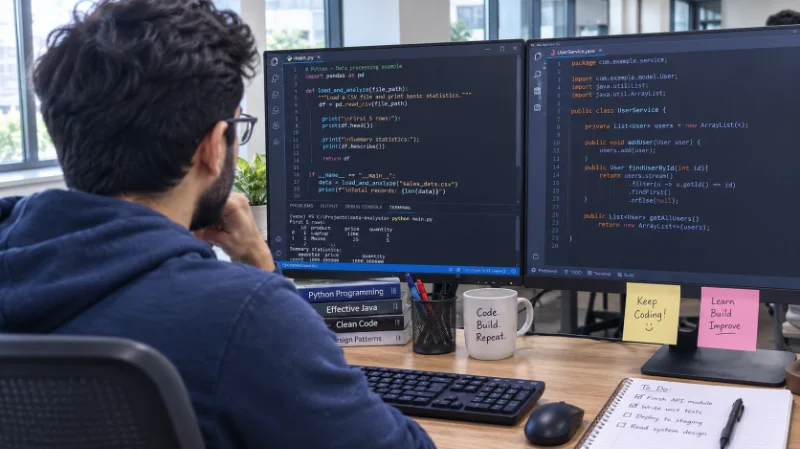
- Passing a string where a function expects a number, which raises a TypeError only when that exact line executes, sometimes deep into production use.
- Typos in attribute names that silently create a new attribute instead of raising an error, because Python objects allow new attributes to be added at any point.
- Functions that return different types depending on the input, which can break code that assumed a consistent return type.
- Mixing None with expected values, since Python allows any variable to hold None unless you explicitly guard against it.
These are not signs that Python is poorly designed. They are the direct trade-off for not requiring type declarations, and experienced Python developers build habits and tooling around them rather than fighting the language’s core design.
Type Hints: Python’s Answer to the Downsides
Python 3.5 introduced optional type hints through PEP 484, giving developers a way to write down the expected type of a variable, argument, or return value without forcing the interpreter to enforce it. The syntax looks like this:
def greet(name: str) -> str:
return “Hello, ” + name
Python still runs this function exactly the same way even if you pass an integer instead of a string. The hints are documentation and a target for external tools, not a runtime restriction. This is often called gradual typing, since a codebase can add hints file by file instead of rewriting everything at once.
1. Using the typing Module
The standard library’s typing module and the newer typing.python.org documentation describe how to express more complex shapes, including lists of a specific type, optional values, unions of multiple possible types, and custom protocols for duck-typed interfaces. Recent Python versions have moved much of this toward built-in generic syntax, such as writing list[int] directly instead of importing List from typing.
2. Tools Like mypy and pyright
Type hints only catch mistakes when something actually reads them. Static type checkers such as mypy, pyrefly, and ty scan your codebase, compare your code against the hints you wrote, and flag mismatches before you ever run the program. Many teams run one of these checkers as part of their continuous integration pipeline so a mismatched type fails the build instead of reaching a customer.
When Dynamic Typing Helps and When It Hurts
Dynamic typing tends to pay off in scripts, data analysis notebooks, small automation tools, and early-stage prototypes where the code changes daily and speed of writing matters more than long-term safety. A short script that resizes a folder of images does not need a type system standing between the idea and the working code.
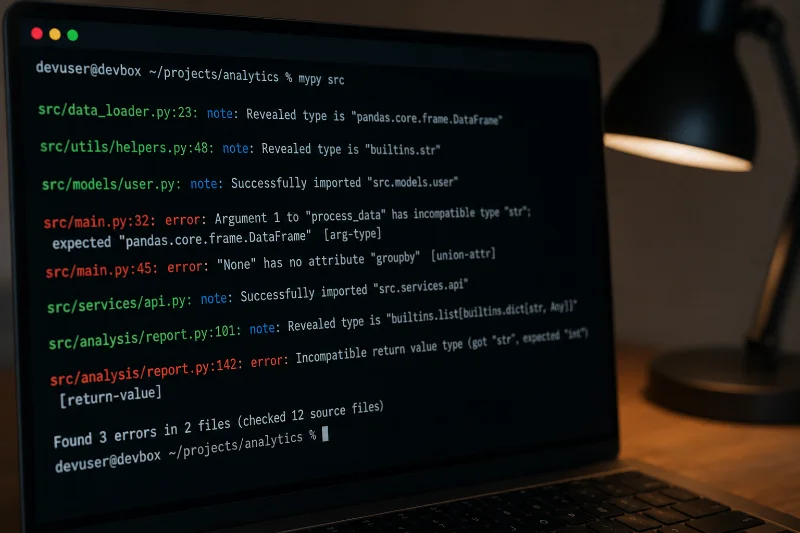
It tends to hurt more in large applications with many contributors, long-lived codebases that get refactored repeatedly, and any project where a wrong type reaching production could cost real money, such as billing or medical software. Teams working on these usually add type hints and a checker specifically to offset the risk that comes with dynamic typing at scale.
Django and Flask, two of the most used Python web frameworks in the United States job market, both work fine without any type hints, but larger companies including Dropbox and Instagram have publicly adopted mypy across parts of their Python codebases to catch this exact category of bug before deployment.
Practical Tips for Writing Safer Dynamically Typed Code
A few habits reduce the risk that comes with Python’s runtime type checking without giving up the flexibility that makes the language fast to write:
- Add type hints to function signatures first, since that is where mismatched types cause the most damage.
- Run mypy or pyright locally before pushing code, not just in CI, so feedback arrives in seconds instead of minutes.
- Use isinstance() checks at the boundaries of your program, such as where user input or API responses enter your code, since that is where unexpected types usually come from.
- Write unit tests that pass the wrong type on purpose, confirming your function fails the way you expect rather than silently producing bad data.
- Avoid functions that return different types based on their input. Pick one return type and stick to it, or return None consistently when there is nothing to return.
Dynamic typing is not a flaw to work around. It is the reason Python scripts can go from an empty file to working code in minutes, and the ecosystem’s gradual typing tools exist specifically so that flexibility does not have to come at the cost of catching real bugs before they reach users.